A couple recently contacted me after visiting our website, unsure which water system their home actually needed.
“We know our water has problems,” the husband explained, “but we’re not sure which system will fix it.”
That conversation happens almost daily at Scotts Water Treatment. It highlights one of the most common misunderstandings homeowners face when addressing water quality issues in their Nashville area homes.
Understanding the difference between water softeners and water filters, what problems each solves, and which system your Hendersonville home needs creates the foundation for making the right investment in your family’s water quality and home protection.
Water Softeners vs. Water Filters
Water softeners and water filters serve fundamentally different purposes, though both improve water quality. The confusion arises because people often use these terms interchangeably, not realizing they address completely different water problems. Choosing the wrong system means spending money without solving your actual water issues.
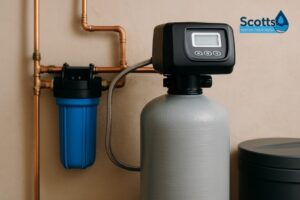
Water softeners specifically address hard water problems caused by high concentrations of calcium and magnesium minerals. These minerals create scale buildup in pipes, water heaters, and appliances, leave spots on dishes and glassware, make soap less effective, and cause dry skin and dull hair.
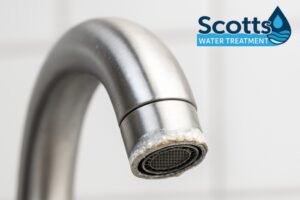
If you notice white crusty deposits around faucets, soap scum that won’t rinse clean, or appliances that fail prematurely, you’re dealing with hard water that requires a water softener.
The water softening process uses ion exchange technology, replacing calcium and magnesium ions with sodium ions. This prevents scale formation, extends appliance life, improves soap effectiveness, and makes water feel noticeably different on skin and hair.
Water softeners don’t remove contaminants like chlorine, bacteria, or chemicals they only address hardness minerals.
Water filters, by contrast, remove contaminants and impurities from your water supply. Depending on the filtration technology, these systems can remove chlorine, sediment, bacteria, viruses, heavy metals, pesticides, and other harmful substances.
If your water tastes or smells bad, contains visible particles, or you’re concerned about health-related contaminants, you need water filtration rather than softening.
Real-Life Example
I remember working with a Hendersonville family who installed a water softener hoping to eliminate the chlorine taste in their tap water. Three months later they called, frustrated that the problem persisted.
The softener was working perfectly their hard water issues had disappeared but it couldn’t remove chlorine because that’s not what softeners do. Once we added a whole house water filter, both problems were solved.
Choosing the Right System
The key to choosing correctly starts with identifying your specific water problems. Professional water testing reveals exactly what’s in your water hardness levels, chlorine content, pH, contaminants, and other factors that affect quality and safety.
This testing eliminates guesswork and ensures you invest in the right solution.
Hard water indicators include scale buildup on fixtures, spotty dishes, soap that doesn’t lather well, dry itchy skin after showering, dull laundry colors, and reduced water heater efficiency.
Middle Tennessee water typically contains significant hardness minerals, making water softeners beneficial for most homes in the Nashville and surrounding areas.
Filtration indicators include chlorine taste or smell, discolored water, sediment in water, concerns about well water safety, or knowledge of contaminants in your municipal supply.
City water contains chlorine for disinfection, which many people find objectionable in taste and smell, making filtration desirable even when water is technically safe.
When You Need Both
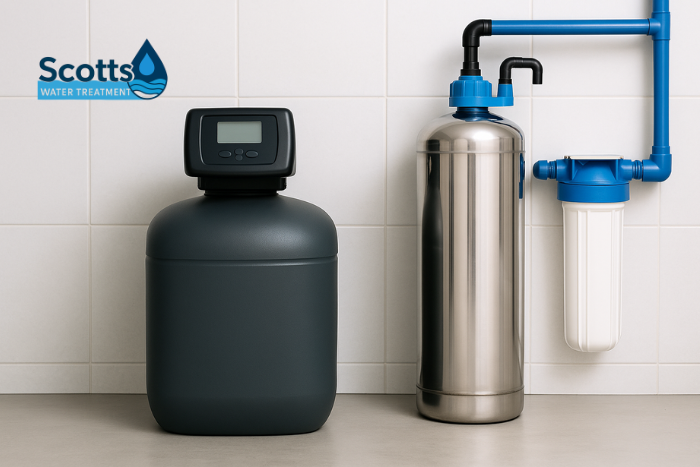
Many Hendersonville homes actually need both systems working together. Hard water and contamination issues often coexist, requiring comprehensive treatment.
The good news is these systems complement each other perfectly the softener addresses minerals while the filter removes contaminants, providing complete water treatment.
Installation order matters when combining systems. Typically, filtration comes first to remove sediment and contaminants that could damage the softener, followed by the softener to address hardness. This sequence protects both systems and ensures optimal performance.
Reverse Osmosis Systems
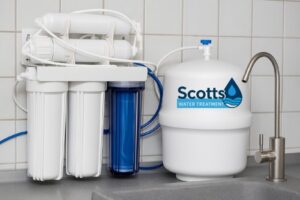
Reverse osmosis systems represent a third category that homeowners sometimes confuse with whole house filtration.
RO systems provide extremely pure drinking and cooking water by removing virtually all contaminants, but they’re typically installed at a single point of use usually the kitchen sink rather than treating all water entering your home.
RO systems work beautifully alongside softeners and whole house filters, providing comprehensive water treatment.
Cost, Maintenance, and Performance
Cost considerations differ significantly between systems. Water softeners typically cost less initially but require ongoing salt purchases. Whole house filters vary widely in price depending on technology and capacity, with some requiring periodic filter replacements.
Understanding total cost of ownership initial investment plus ongoing maintenance helps with accurate budgeting.
Maintenance requirements also differ. Water softeners need salt refills and occasional resin bed cleaning. Filters require periodic cartridge or media replacements depending on system type.
Professional installation and maintenance ensure systems operate efficiently and last their expected lifespan.
Water pressure impacts should be considered. Some filtration systems slightly reduce water pressure, though quality systems minimize this effect. Water softeners typically don’t affect pressure.
If you already have pressure issues, addressing them before or during water treatment installation prevents complications.
Health, Appliance, and Environmental Benefits
The health benefits of proper water treatment extend beyond taste and convenience. Removing contaminants protects your family from potential health risks.
Softened water reduces skin irritation and improves hair health. Clean, great-tasting water encourages increased water consumption, supporting overall health.
Appliance protection represents a significant financial benefit of water softeners. Hard water dramatically shortens the lifespan of water heaters, dishwashers, washing machines, and other water-using appliances.
The money saved on appliance repairs and replacements often exceeds the cost of the softener itself.
Environmental considerations factor into the decision. Softened water requires less soap and detergent, reducing chemical use and environmental impact.
Quality filtration systems eliminate bottled water needs, reducing plastic waste. These environmental benefits align with many homeowners’ values while providing practical advantages.
The Scotts Water Treatment Approach
The Scotts Water Treatment approach begins with comprehensive water testing to identify your specific issues.
We explain what’s in your water, what problems those substances cause, and which treatment options address your particular situation.
This educational approach ensures you understand exactly what you’re purchasing and why.
Professional installation ensures systems work correctly from day one. Improper installation can cause leaks, reduce effectiveness, or damage plumbing.
Our experience with Nashville area water conditions and local plumbing systems prevents problems and ensures optimal performance.
Ongoing support and maintenance keep systems operating efficiently for years. We provide service, answer questions, and help troubleshoot any issues that arise.
This relationship-based approach contrasts sharply with buying equipment online or from big box stores that offer no local support.
Making the right choice between water softeners and filters or determining you need both—protects your investment and ensures you actually solve your water problems.
Professional guidance, accurate testing, and quality equipment installation create water treatment systems that serve your Hendersonville home for decades.
About Scotts Water Treatment
Scotts Water Treatment provides professional water testing, expert guidance, and quality water softener and filtration system installation throughout Nashville and surrounding areas.
Our commitment to personalized service ensures every customer gets the right solution for their specific water quality needs.
Contact Scotts Water Treatment:
📞 Phone: 615-970-2121
📧 Email: scott@scottswatertreatment.com
📍 Service Area: Nashville and surrounding areas
💧 Not Sure What Your Water Needs? Call today for free professional water testing and expert recommendations!